
Under the hood
How an everyday thing works, shown from the inside
Explain how one everyday thing really works, such as contactless payment, a QR code, a touchscreen or noise-cancelling earbuds, in a 60-90 second vertical video (1080x1920) with a computed cross-section.
Important: this is a skill for terminal AI coding agents (Claude Code, Codex) that runs on your own computer. It is not a prompt for the ChatGPT website. Check the requirements below before buying.
Why this look
You tap your card and it pays. No cable, no button. The viewer hears that paradox, then sees the mechanism in a magnified cut-away or on a sensor grid: gold field lines bend, readouts change, numbers move because the picture moves. Everything that moves is computed from the scene, so the picture and the number cannot disagree.
The screen has three fixed tiers:
- Top: karaoke captions, one word at a time, with blue selection boxes on your keywords.
- Middle: the exhibit, one scene at a time, on a dark graphite stage that can fade to paper for interface and document scenes.
- Bottom: a narrator mascot. The default is Volt, a small robot engineer with 12 poses. You can make your own character from a picture.
The story: 8 to 12 scenes
- Paradox: the ordinary thing that should not work.
- Question: what happens in under a second?
- Reframe: "not X, it is Y", with one concrete number.
- Imagine: an everyday analogy.
- Mechanism with numbers, step by step.
- Evidence: a real source (a person, patent, paper or standard) with a yellow highlight on the claim.
- "That is also why...": one or two consequences.
- Close, then a "send this to someone who still thinks..." share scene.
Scene types include the cut-away, a pressed touch layer, a sensor grid, an electrode lattice, phone mock-ups with a tapping glove, source cards, bars, a gauge and a big counter.
How it works
Open your agent and type a request like this:
Make an under-the-hood video: how does contactless payment work? Use real sourcesThe agent web-checks every claim into a facts file, writes the script and storyboard, generates the voice-over in one take and renders an MP4. Model values on screen keep a footnote marking them as illustrative. Two review gates must be stamped before posting.
What you get
- A 9:16 MP4 at 1080x1920, mixed to -14 LUFS.
- A quiet ambient music bed and sound effects.
- A voice in Vietnamese (default) or English.
- A cover image step for posting.
- Each video ends with a style-reference credit line (
Style: <channel>, orPhong cách: <channel>in Vietnamese), as the guide requires, and the script must be your own words.
What you need
- Claude Code or Codex, able to run the skill's Node.js and Python scripts.
- A Gemini key, an ElevenLabs key and a Soniox key (for word timings).
- Vietnamese voice: installed once with the skill's
setup-vieneu.py.
Install
~/.claude/skills/agentvid-motion-under-the-hood-9x16/For Codex, use ~/.agents/skills/agentvid-motion-under-the-hood-9x16/.
Who it is for
Science and tech channels for curious adults, explaining one everyday device per video.
Not a fit if you want
- News or product promos.
- A topic with no mechanism or no source.
Frequently asked questions
Are the readouts real measurements?
No. They are computed from the scene's model and labelled as illustrative on screen. Facts, names and years come from real sources.
Can I use the videos commercially?
Videos you render are yours for any commercial use. You may not resell, redistribute or share the skill files.
More looks from Animated Explainer
Full set: Animated Explainer
14 looks

Agent diagram
One AI concept on a living node diagram
AI for Business Explainer
Explain AI agents to business owners in a 60-90 s vertical video

Big canvas mind map
A big hand-drawn mind map with the camera following each branch
 Included in ReelCrew
Cinematic explainer
A cinematic science explainer of about 30 seconds
E-commerce & Retail Explainer
Selling online, profit per order and shop tips as vertical explainers
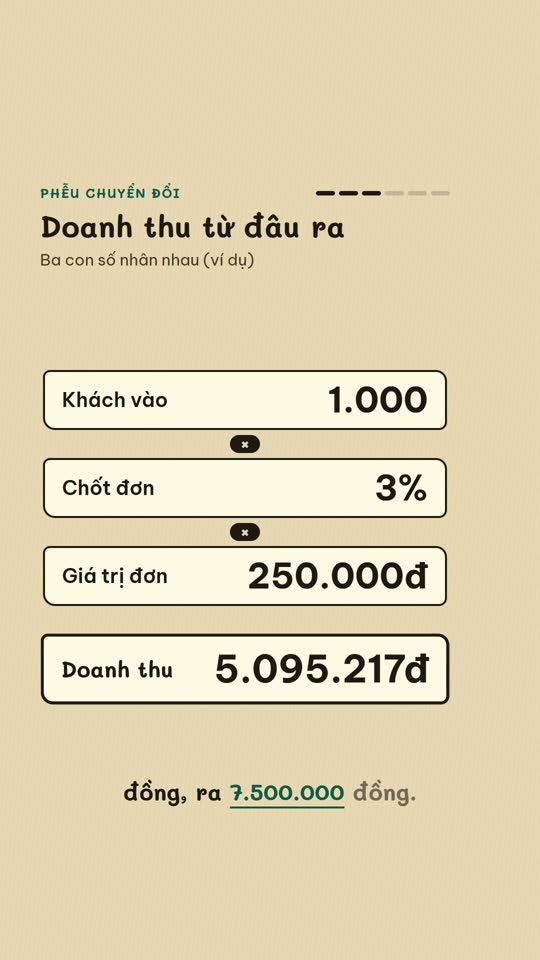
E-commerce diagram
An online-selling concept on a single diagram board
English Learning Explainer
Short English lessons built from common mistakes
Start with one look, step up when you need more
Related looks

English listening
English listening practice: reader, vocab, guess and joke formats

Excel setting
One Excel setting, with a cursor clicking through each value
Sourced clip short
A multi-scene short with source clips and an on-screen credit
 Included in ReelCrew
Archival documentary
An 8-10 minute documentary built from archive material
 Included in ReelCrew
Engraved plate
An antique engraving film for philosophy and history
 Included in ReelCrew
Hand-drawn lesson
A 3-4 minute hand-drawn animated lesson from a talk
 Included in ReelCrew
News photo short
Breaking news told with press photos and a female news anchor voice
 Included in ReelCrew
Paper 3Blue1Brown
Explain a paper 3Blue1Brown style, with formulas built to the narration